We only read the first three chapters, so here is the full blog on those.
Summary
The first chapter discusses why attractive things work better. Norman explains how emotions help a person make decisions and how happiness increases thought processes and encourages creative thinking. Tying this into to design, attractive design allows for a more enjoyable experience and helps people figure things out. Norman also discusses the three levels of processing: visceral (the automatic layer), behavioral (everyday behavior layer) and reflective (contemplative layer). He then discusses how the three levels interact with each other and how they relate to focus and creativity.
The second chapter discusses how the different levels of processing work within a design and how they work with and against each other. As stated in the chapter, visceral design is about the initial impact of the product, behavioral about the use and experience, and reflective about understanding, reasoning and interpreting. Norman also discusses the importance of memories, how objects evoke memories and how these memories reflect us. He concludes the chapter by discussing the design of products when taking the three levels of processing into account. He discusses the goals of a product, its fashion and how brands are informative.
Chapter 3 discusses the three levels of design. Visceral design focuses on physical features such as look, feel and sound and is about initial reactions. Behavioral design focuses on function, understandability, usability and physical feel with function being the most important. Reflective design focuses on the meaning of the product, the message the product gives and the culture. Norman also presents a case study on the national football league headset and concludes by comparing the process of design by committee and the process of design by the individual.
Discussion
While I enjoyed the ideas presented in the first three chapters, Norman did start to repeat himself, so I’m glad we did not have to read this entire book. The emotional design Norman describes is an important aspect that I think is oftentimes overlooked.
Norman gives plenty of good examples from automobiles to watches to bottled water to help explain the differences between the three levels of design. I enjoyed the part in chapter 3 about how stores will put the most often bought items at the back of the store. I have pondered over this before, but now I’ll probably always be thinking about it when I visit a new store. I also thought the Xbox advertisement was funny in chapter 2, and I enjoyed the way Norman analyzed it.
Wednesday, March 30, 2011
Saturday, March 26, 2011
Paper Reading #18: Speeding pointing in tiled widgets: understanding the effects of target expansion and misprediction
Comments
Alyssa Nabors
Evin Schuchardt
Reference Information
Title: Speeding pointing in tiled widgets: understanding the effects of target expansion and misprediction
Authors: Jaime Ruiz, Edward Lank
Presentation Venue: IUI 2010: Proceedings of the 15th international conference on Intelligent user interfaces; February 7-10, 2009; Hong Kong, China
Summary
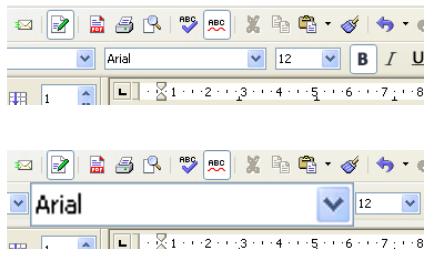
This paper discusses a technique to improve pointing with a mouse, trackball, stylus, etc. While the researchers list several possible techniques to improve performance, they focus on target expansion, which basically means that the target the person means to click on expands to make it easier to select. This isn’t as useful when the targets are in a dense arrangement, so the researchers also focus on a technique for predicting where a user will select in real time. A technique described in the paper is kinematic endpoint prediction (KEP), which “uses the motion profile of a user to define a region of interest on the display.” KEP is described in more detail in other papers referenced in this paper.
The researchers perform two experiments. In the first experiment, they test to see if it is possible to expand a certain set of targets that are predicted to be selected and whether target displacement is acceptable. Target displacement refers to targets near the expanded targets shifting their positions to make room for the expanded target. They presented users with a random set of pointing tasks with some tasks using expansion with a simulated predictor said to be highly accurate and some using no expansion. There were seven possible tiles to select.
In the second experiment they used a similar procedure except they used the KEP algorithm to predict which targets should be expanded and tiled the entire screen with targets rather than just displaying seven targets.
Through their experiments they prove that target expansion does improve pointing and selecting performance if there is a small set of targets. They also find that whatever technique is used to predict where a user will select must have an accuracy greater than 56.5 percent. They also determined that there was a limit to how much a target should shift when expanded.
Discussion
Overall this was an interesting paper. Their experiments were thoroughly explained and their findings made sense. I wasn’t particularly interested in the topic. The researchers explain how improving pointing performance by even a small margin can greatly improve a user’s productivity with graphical user interfaces. At least when it comes to programs like Microsoft Word, I don’t think something like this would be useful. Having the most frequently used buttons along the top and using shortcuts seems sufficient to me.
Future work that the researchers mention include improving the accuracy of the KEP algorithm, using different expansion strategies and exploring other techniques to improve pointing performance.
Alyssa Nabors
Evin Schuchardt
Reference Information
Title: Speeding pointing in tiled widgets: understanding the effects of target expansion and misprediction
Authors: Jaime Ruiz, Edward Lank
Presentation Venue: IUI 2010: Proceedings of the 15th international conference on Intelligent user interfaces; February 7-10, 2009; Hong Kong, China
Summary
This paper discusses a technique to improve pointing with a mouse, trackball, stylus, etc. While the researchers list several possible techniques to improve performance, they focus on target expansion, which basically means that the target the person means to click on expands to make it easier to select. This isn’t as useful when the targets are in a dense arrangement, so the researchers also focus on a technique for predicting where a user will select in real time. A technique described in the paper is kinematic endpoint prediction (KEP), which “uses the motion profile of a user to define a region of interest on the display.” KEP is described in more detail in other papers referenced in this paper.
| Image from paper: Unexpanded widget (top); expanded widget using displacement (bottom) |
The researchers perform two experiments. In the first experiment, they test to see if it is possible to expand a certain set of targets that are predicted to be selected and whether target displacement is acceptable. Target displacement refers to targets near the expanded targets shifting their positions to make room for the expanded target. They presented users with a random set of pointing tasks with some tasks using expansion with a simulated predictor said to be highly accurate and some using no expansion. There were seven possible tiles to select.
In the second experiment they used a similar procedure except they used the KEP algorithm to predict which targets should be expanded and tiled the entire screen with targets rather than just displaying seven targets.
Through their experiments they prove that target expansion does improve pointing and selecting performance if there is a small set of targets. They also find that whatever technique is used to predict where a user will select must have an accuracy greater than 56.5 percent. They also determined that there was a limit to how much a target should shift when expanded.
Discussion
Overall this was an interesting paper. Their experiments were thoroughly explained and their findings made sense. I wasn’t particularly interested in the topic. The researchers explain how improving pointing performance by even a small margin can greatly improve a user’s productivity with graphical user interfaces. At least when it comes to programs like Microsoft Word, I don’t think something like this would be useful. Having the most frequently used buttons along the top and using shortcuts seems sufficient to me.
Future work that the researchers mention include improving the accuracy of the KEP algorithm, using different expansion strategies and exploring other techniques to improve pointing performance.
Book Reading #42: Coming of Age in Samoa
Appendix III
Summary
Appendix III discusses Samoa and how it was when this book was published. Mead describes the geography, housing, clothing, some of the small household changes that have taken place as a result of outside influence and the interaction with the Naval Government. She discusses schooling and how the blending different European beliefs and mechanical devices have created a kind of flexibility within the culture.
Mead also discusses how Samoa is different from the Samoa “before white influence.” She concludes by pointing out that the Samoans have benefited from outside influences – doing away with things such as war, blood revenge, etc. – without negative effects. Mead also writes that the Samoans have taken parts from our culture that made life more comfortable without losing their own ways and culture.
Discussion
This was a good section to read after having read the book. I found the comparison between Samoa before and after “white influence” to be interesting. I also liked reading about how they have incorporated different parts of our culture into theirs without fully losing sight of their own way of doing things.
Summary
Appendix III discusses Samoa and how it was when this book was published. Mead describes the geography, housing, clothing, some of the small household changes that have taken place as a result of outside influence and the interaction with the Naval Government. She discusses schooling and how the blending different European beliefs and mechanical devices have created a kind of flexibility within the culture.
Mead also discusses how Samoa is different from the Samoa “before white influence.” She concludes by pointing out that the Samoans have benefited from outside influences – doing away with things such as war, blood revenge, etc. – without negative effects. Mead also writes that the Samoans have taken parts from our culture that made life more comfortable without losing their own ways and culture.
Discussion
This was a good section to read after having read the book. I found the comparison between Samoa before and after “white influence” to be interesting. I also liked reading about how they have incorporated different parts of our culture into theirs without fully losing sight of their own way of doing things.
Paper Reading #17: A code reuse interface for non-programmer middle school students
Comments
Luke Roberts
Evin Schuchardt
Reference Information
Title: A code reuse interface for non-programmer middle school students
Authors: Paul A. Gross, Micah S. Herstand, Jordana W. Hodges, Caitlin L. Kelleher
Presentation Venue: IUI 2010: Proceedings of the 15th international conference on Intelligent user interfaces; February 7-10, 2009; Hong Kong, China
Summary
In this paper researchers discuss their work with Looking Glass, a system under development that allows people – particularly middle school aged students – learn programming skills through dragging graphical tiles and pop-up menus that allow them to create interactive 3D stories. They add to the Looking Glass system to allow users to reuse functionality from other preexisting programs. While a simple copy-and-paste of code will work for experienced programmers, their goal was to create a way for people who do not understand the code to still capture and reuse its functionality.
To help users identify the part of the animation they want to use in their programmed animation, the researchers make use of a Time Slider and Scene Viewer to allow the user to select the proper start and end time of the animation visually, a Current Actions Pane that displays all methods being executed for a specific character at a selected time and a Code Viewer Pane to allow the user to view the appropriate code. They provide the user with a wizard-style interface to help the user actually extract and integrate the action into their own animation. With this process a user can take an action – say a man kicking a scientist down – and reuse the code for that action to make a kid kick down a samurai.
The researchers also discuss errors that could arise if the 3D objects are of different sizes or different subparts. They resolve these issues during copying by having the user reference subparts by name and choose more subparts if there is no match (like when one character wears a hat but another does not – the user would be asked to give the character a hat).
They did a user study with 47 students in sixth, seventh and eighth grade. They demonstrated the basic uses of the system and provided the students with three example programs. When asked questions, they suggested programs from an example library to encourage students to learn from the code and reuse the code. They also had the students break up into groups and show their animations to further encourage students to reuse animations.
Through their results they discovered that the program encouraged students to show each other how they did different animations. 77% of the actions used in the animation contained more than five lines of code, which the researchers consider non-trivial functionality. They also had the students take a programming quiz at the end of the study and found that students who made changes to the code of actions – rather than just copying them – performed better on the tests. Overall they found that their system helped students successfully select and integrate code.
Discussion
I really enjoyed reading about this system. It’s a neat way to introduce programming at a young age. It kind of reminds me of RPG Maker, which I remember playing with a lot during middle school. Allowing the student to see both a visual representation of their code and the actual code being used is a great way to help people new to coding understand how things work.
Future work that the researchers mention is creating a tutorial to help teach students how to build the code for an action. They are also thinking about creating a system that allows for a student to watch actions while they are recorded. This way when a user sees an action they want, they can stop the video and automatically begin the reuse process without have to go through the selection process.
Luke Roberts
Evin Schuchardt
Reference Information
Title: A code reuse interface for non-programmer middle school students
Authors: Paul A. Gross, Micah S. Herstand, Jordana W. Hodges, Caitlin L. Kelleher
Presentation Venue: IUI 2010: Proceedings of the 15th international conference on Intelligent user interfaces; February 7-10, 2009; Hong Kong, China
Summary
In this paper researchers discuss their work with Looking Glass, a system under development that allows people – particularly middle school aged students – learn programming skills through dragging graphical tiles and pop-up menus that allow them to create interactive 3D stories. They add to the Looking Glass system to allow users to reuse functionality from other preexisting programs. While a simple copy-and-paste of code will work for experienced programmers, their goal was to create a way for people who do not understand the code to still capture and reuse its functionality.
| Taken from paper: a look at the user interface |
The researchers also discuss errors that could arise if the 3D objects are of different sizes or different subparts. They resolve these issues during copying by having the user reference subparts by name and choose more subparts if there is no match (like when one character wears a hat but another does not – the user would be asked to give the character a hat).
They did a user study with 47 students in sixth, seventh and eighth grade. They demonstrated the basic uses of the system and provided the students with three example programs. When asked questions, they suggested programs from an example library to encourage students to learn from the code and reuse the code. They also had the students break up into groups and show their animations to further encourage students to reuse animations.
Through their results they discovered that the program encouraged students to show each other how they did different animations. 77% of the actions used in the animation contained more than five lines of code, which the researchers consider non-trivial functionality. They also had the students take a programming quiz at the end of the study and found that students who made changes to the code of actions – rather than just copying them – performed better on the tests. Overall they found that their system helped students successfully select and integrate code.
Discussion
I really enjoyed reading about this system. It’s a neat way to introduce programming at a young age. It kind of reminds me of RPG Maker, which I remember playing with a lot during middle school. Allowing the student to see both a visual representation of their code and the actual code being used is a great way to help people new to coding understand how things work.
Future work that the researchers mention is creating a tutorial to help teach students how to build the code for an action. They are also thinking about creating a system that allows for a student to watch actions while they are recorded. This way when a user sees an action they want, they can stop the video and automatically begin the reuse process without have to go through the selection process.
Ethnography Results Week 7
Sweet Eugene’s House of Java
Friday March 25, 2011
8:30-10:30pm
Quantitative
Totals for the evening:
Order drink to go: ? (I wasn’t in a good place to view this)
On Computer: 27
Reading book/ doing homework: 15 (defined as having book and/or spiral and pencil)
Working with computer and book: 4
Visiting: 9 (some of these appeared to have the intention of studying)
Main goal to eat: 9 (these people read a book or used their computer until food arrived. Then they ate and left)
Eating and visiting: 2 (they were eating but that did not appear to be the main goal based on how long they stuck around afterwards)
Playing cards: 4
The front part of the place seemed to be more popular than the back. I sat in the back, so I didn’t have the best view of the front.
Qualitative
My location
I started out in the middle area where I sat for the first few weeks, but then I moved to an available outlet when I spotted one. Then I was in the spot at the very back of the coffee shop next to the back exit where I’ve been sitting the last few weeks. I couldn’t see the front very easily. I also wasn’t in the best spot to watch a great number of people without looking obvious.
The Employees
I didn’t recognize the employees (one guy and one girl) this time. One guy kept getting the girl to do all the work while he worked the register. The girl complained openly about how she shouldn’t be doing it because she was sick. I gave her a concerned look because she was saying this as she made my java shake. Then she quickly said, “I’m not sick. I’m just sick of him.” Hmm…
The customers
With this being the seventh week, I’d say most of the patterns in the space have been documented. While I did see four people playing cards again, which I have only seen twice, the typical reasons for coming to Sweet Eugene’s seem to be for studying and working in groups. A few come to visit and even a few for the soul purpose of eating, but the great majority that I see – at least in the evenings – are doing some type of school work.
The general patterns for people coming in fall into two main categories. They come in, head for the front to order and then seek out a seat or they come in, stake out their seat by putting their bags down and then go order. Typically people with computers first seek out tables along the walls where the outlets are and a lot of people check out the back room with all the Mona Lisa paintings first.
It’s not unusual for people to clean off a table so they can sit there, and once a dirty dish appears on a table, the table tends to become the designated dirty dishes table until an employee comes around to clean. I’d estimate that about half of the customers take their dishes to the front while the others either leave them on their table or move them to the “designated dirty dishes table.” My estimation is just that: an estimation. I haven’t been collecting quantitative data on that though it would be worthwhile in future studies.
Typically the place is quiet enough that no one seems bothered. That’s not to say that there isn’t noise. People visiting and working in groups talk a lot, but it’s not very often that the noise gets so loud as to distract/bother people.
In general most people respect the rule of not bringing in outside food though I have noticed a few groups over the weeks that have brought in a drink or Chick-fil-A. And typically every person that comes in buys something – usually it’s a drink.
Friday March 25, 2011
8:30-10:30pm
Quantitative
Totals for the evening:
Order drink to go: ? (I wasn’t in a good place to view this)
On Computer: 27
Reading book/ doing homework: 15 (defined as having book and/or spiral and pencil)
Working with computer and book: 4
Visiting: 9 (some of these appeared to have the intention of studying)
Main goal to eat: 9 (these people read a book or used their computer until food arrived. Then they ate and left)
Eating and visiting: 2 (they were eating but that did not appear to be the main goal based on how long they stuck around afterwards)
Playing cards: 4
The front part of the place seemed to be more popular than the back. I sat in the back, so I didn’t have the best view of the front.
Qualitative
![]() |
| Image taken from their Facebook Page |
I started out in the middle area where I sat for the first few weeks, but then I moved to an available outlet when I spotted one. Then I was in the spot at the very back of the coffee shop next to the back exit where I’ve been sitting the last few weeks. I couldn’t see the front very easily. I also wasn’t in the best spot to watch a great number of people without looking obvious.
The Employees
I didn’t recognize the employees (one guy and one girl) this time. One guy kept getting the girl to do all the work while he worked the register. The girl complained openly about how she shouldn’t be doing it because she was sick. I gave her a concerned look because she was saying this as she made my java shake. Then she quickly said, “I’m not sick. I’m just sick of him.” Hmm…
The customers
With this being the seventh week, I’d say most of the patterns in the space have been documented. While I did see four people playing cards again, which I have only seen twice, the typical reasons for coming to Sweet Eugene’s seem to be for studying and working in groups. A few come to visit and even a few for the soul purpose of eating, but the great majority that I see – at least in the evenings – are doing some type of school work.
The general patterns for people coming in fall into two main categories. They come in, head for the front to order and then seek out a seat or they come in, stake out their seat by putting their bags down and then go order. Typically people with computers first seek out tables along the walls where the outlets are and a lot of people check out the back room with all the Mona Lisa paintings first.
It’s not unusual for people to clean off a table so they can sit there, and once a dirty dish appears on a table, the table tends to become the designated dirty dishes table until an employee comes around to clean. I’d estimate that about half of the customers take their dishes to the front while the others either leave them on their table or move them to the “designated dirty dishes table.” My estimation is just that: an estimation. I haven’t been collecting quantitative data on that though it would be worthwhile in future studies.
Typically the place is quiet enough that no one seems bothered. That’s not to say that there isn’t noise. People visiting and working in groups talk a lot, but it’s not very often that the noise gets so loud as to distract/bother people.
In general most people respect the rule of not bringing in outside food though I have noticed a few groups over the weeks that have brought in a drink or Chick-fil-A. And typically every person that comes in buys something – usually it’s a drink.
Friday, March 25, 2011
Book Reading #41: Why We Make Mistakes
Chapter 2
Summary
The second chapter continues the discussion of the first chapter, but doesn’t spend as much of the chapter on vision. The focus is on how the meanings we pick up on in what we see/hear are more important than the actual details of a scene. As in the first chapter, Hallinan gives many examples such as slip-of-the-tongue errors, recalling part of something (like a name) but not all of it and how we forget passwords and hiding places. At the end of the chapter Hallinan relates the discussion to crime and the process of identifying suspects.
Discussion
The penny test provided in this chapter is a common one but a great example of how details aren’t stored well in memory. An interesting piece of advice given in this chapter is that we should come up with our passwords and hiding places quickly. Otherwise, we won’t remember it in the future because we had to figure it out first. I also thought the story of June Siler and Robert Wilson was an interesting one.
Chapter 3
Summary
Chapter 3 focuses on how we consider things. Hallinan begins with an example about people running for election and how voters make quick decisions based off of how competent a candidate looks. He gave another example of how people drinking wine rated the $90 wine as tasting the best when it was the same as the $10 wine – their brains even showed more evidence of being happy with the more expensive wine. Price is not the only thing that plays a part in this. The color of objects and a person’s memory of regret also play a role in people’s choices and consequently their mistakes. The author states that all of these examples are given to help readers better understand sources of mistakes.
Discussion
I like how Hallinan uses so many examples throughout each chapter. One example I especially liked in this chapter was the wine example. It reminded me of peanut butter and how I always used to buy the Peter Pan Peanut butter. When that salmonella problem occurred a few years back, both the Peter Pan Peanut butter and the cheaper off brand were recalled. On the news they said both were processed in the same facility. It made me think about how similar (if not exact) the products are. Now I buy a lot more off-brand products.
Summary
The second chapter continues the discussion of the first chapter, but doesn’t spend as much of the chapter on vision. The focus is on how the meanings we pick up on in what we see/hear are more important than the actual details of a scene. As in the first chapter, Hallinan gives many examples such as slip-of-the-tongue errors, recalling part of something (like a name) but not all of it and how we forget passwords and hiding places. At the end of the chapter Hallinan relates the discussion to crime and the process of identifying suspects.
Discussion
The penny test provided in this chapter is a common one but a great example of how details aren’t stored well in memory. An interesting piece of advice given in this chapter is that we should come up with our passwords and hiding places quickly. Otherwise, we won’t remember it in the future because we had to figure it out first. I also thought the story of June Siler and Robert Wilson was an interesting one.
Chapter 3
Summary
Chapter 3 focuses on how we consider things. Hallinan begins with an example about people running for election and how voters make quick decisions based off of how competent a candidate looks. He gave another example of how people drinking wine rated the $90 wine as tasting the best when it was the same as the $10 wine – their brains even showed more evidence of being happy with the more expensive wine. Price is not the only thing that plays a part in this. The color of objects and a person’s memory of regret also play a role in people’s choices and consequently their mistakes. The author states that all of these examples are given to help readers better understand sources of mistakes.
Discussion
I like how Hallinan uses so many examples throughout each chapter. One example I especially liked in this chapter was the wine example. It reminded me of peanut butter and how I always used to buy the Peter Pan Peanut butter. When that salmonella problem occurred a few years back, both the Peter Pan Peanut butter and the cheaper off brand were recalled. On the news they said both were processed in the same facility. It made me think about how similar (if not exact) the products are. Now I buy a lot more off-brand products.
Thursday, March 24, 2011
Book Reading #40: Coming of Age in Samoa
Chapter 14
Summary
The final chapter of the book mainly focuses on the education of the youth in America. Mead again brings up the point about how boys and girls have to make many decisions at a young age and face conflicting standards. Mead discusses how people are blinded by the American theory of endless possibilities and thus feel overwhelmed by the choices available to them even when there are not as many as they think there are. The author also brings up the family and how parents raise their daughters in ways that conflict with standards outside of the home.
Mead concludes by explaining how in a civilization where there are so many choices and so many ways of doing things, parents must teach their children how to think, not what to think.
Discussion
While reading this last chapter I had to keep in mind when this book was written. While I can draw parallels between some of the stuff she writes and while some of it does still apply even now, some of it was a little out dated (as to be expected from a book originally published in 1930). Still, she makes some good points. I especially liked how she said, “The children must be taught how to think, not what to think.” This is very important, and Mead put it very well in such few words.
Summary
The final chapter of the book mainly focuses on the education of the youth in America. Mead again brings up the point about how boys and girls have to make many decisions at a young age and face conflicting standards. Mead discusses how people are blinded by the American theory of endless possibilities and thus feel overwhelmed by the choices available to them even when there are not as many as they think there are. The author also brings up the family and how parents raise their daughters in ways that conflict with standards outside of the home.
Mead concludes by explaining how in a civilization where there are so many choices and so many ways of doing things, parents must teach their children how to think, not what to think.
Discussion
While reading this last chapter I had to keep in mind when this book was written. While I can draw parallels between some of the stuff she writes and while some of it does still apply even now, some of it was a little out dated (as to be expected from a book originally published in 1930). Still, she makes some good points. I especially liked how she said, “The children must be taught how to think, not what to think.” This is very important, and Mead put it very well in such few words.
Subscribe to:
Posts (Atom)